The Reality and Bottlenecks of AI-Powered 3D Modeling
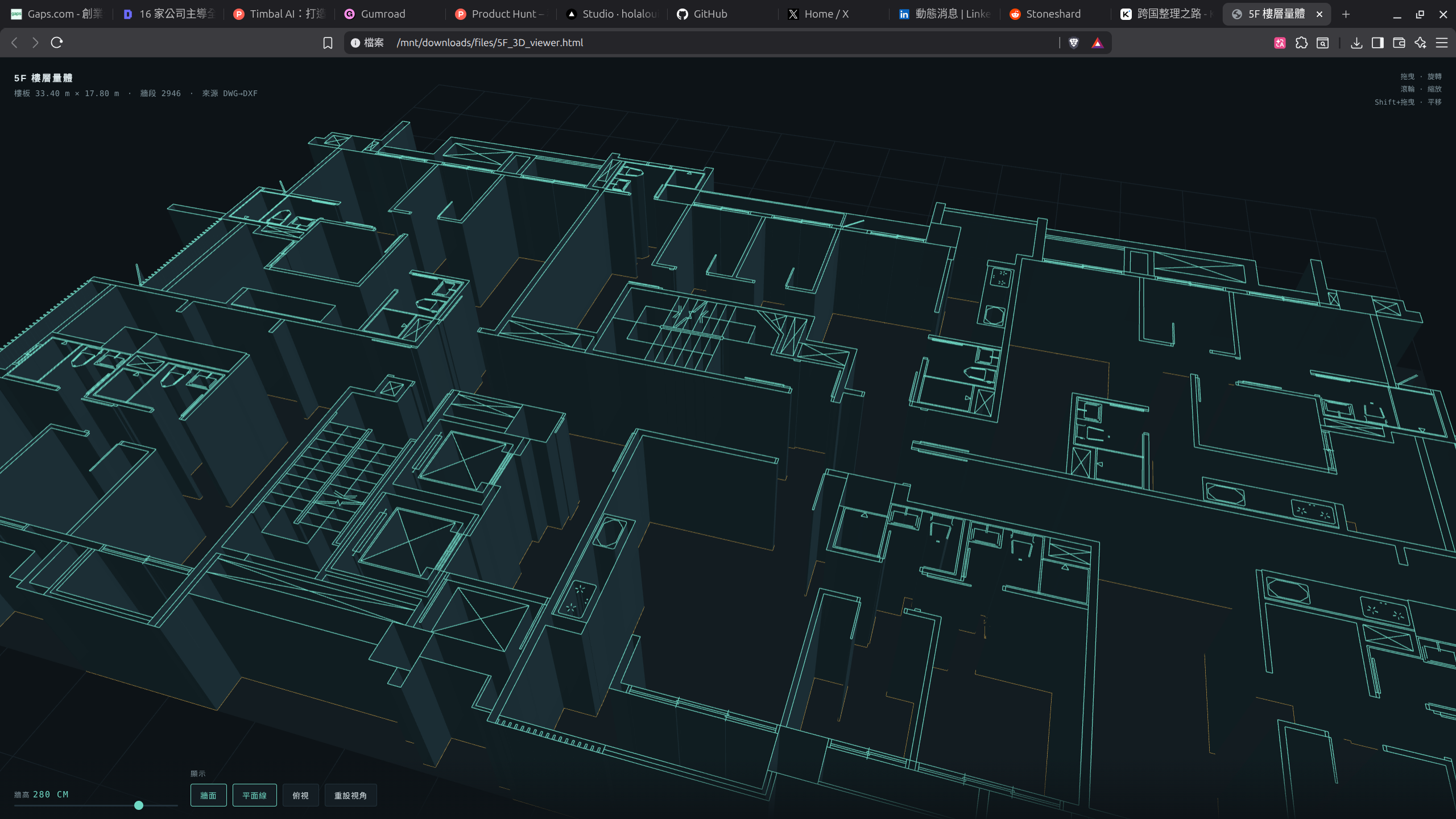
I was scrolling through X today and saw someone sharing 3D engineering drawings of Kimi K3's pipelines. As I looked at them, a thought suddenly crossed my mind: what would happen if I fed AutoCAD files into Claude and had it generate a 3D model directly?
The reality check hit me hard—the result was an absolute disaster, completely unwatchable.
However, after cooling down and thinking it over, this path isn't entirely impossible. The current bottleneck is that the engineering effort required to achieve this kind of automated conversion is far greater than one might imagine. If you really wanted to turn this into a SaaS system, the core challenge lies in the "standardization of data specifications."
This means we can't just rely on AI "intuition"; we must also build a rigorous data system and develop corresponding data input interfaces. Once you've laid all that groundwork, you realize that this is no longer just a simple AI application—you're essentially building another complex editing system like AutoCAD or Photoshop.
This makes me reflect: if we ultimately have to go back to developing a massive piece of editing software, how much room is left for this "AI-enabled" game to play out? Or rather, how can we find the true leverage point within the existing tool ecosystem that AI can actually move? This is certainly a topic worth pondering.